
Best IT Training Institute in Bangalore | 1000+ Students Trained | 40+ Industry-Relevant Courses
Have Question? Call Us +91 9845525377

Techpragna AWS course

DevOps Training Institute in Bangalore
Uncategorized

The DevOps Lifecycle Explained Step-By-Step

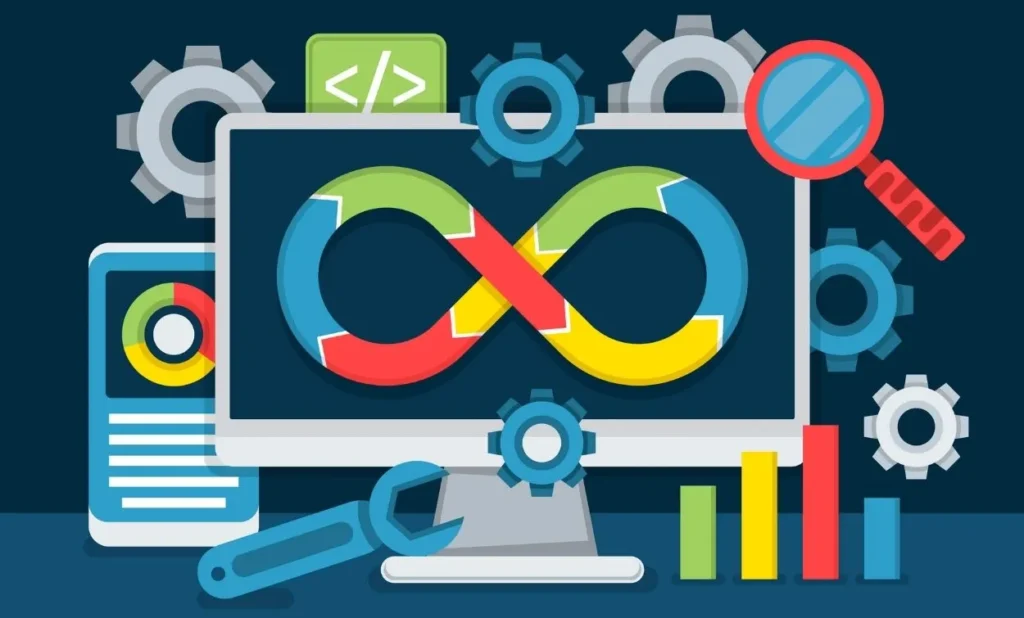
The DevOps Lifecycle Explained Step-By-Step The DevOps Lifecycle begins with DevOps, a methodology for software development that accelerates the build and delivery process.  The milestone became achievable when all teams in an organization worked collectively like a cricket team.  The implementation of DevOps made it possible.  When you introduce a unique application to the market, substantial planning is required. Likewise, the business follows the same process in the DevOps Lifecycle.    Table of Contents 1.   DevOps Lifecycle: Introduction2.   DevOps Lifecycle: Systematic Explanation3.   DevOps Lifecycle: At Techpragna4.   Benefits of learning the DevOps Lifecycle at Techpragna5.   Inference   1.   DevOps Lifecycle: Introduction The term DevOps Lifecycle refers to a continuous, looping process designed to eliminate siloed steps in a traditional model.  Consequently, the process has bridged the gap between software development and IT operations by integrating them in an infinite loop in vital aspects.  These aspects are the infinite collaboration loop, automation, and feedback.  The session explains the step-by-step lifecycle of DevOps.   2.  DevOps Lifecycle: Systematic Explanation DevOps Lifecycle features similar phases to those of software development.  However, each phase has a well-defined purpose and associated activities.  Below are the explanations for each step. a. Planning It’s a phase where the team defines the value they intend to create before writing a single line of code.  Additionally, the phase involves translating business needs and prioritizing time-bound work plans and project management workflows that drive operational activities in other phases. b. Coding It’s the phase in which the developers convert planning and software requirements into source code.  They write the code with quality assurance and future operations in mind, including setting up the components for building, testing, integrating, and deploying that follow in the pipeline. c. Building It’s a step in which automated compilation, validation, and packaging of deployable artifacts are performed in response to a change in the source code.  It’s the DevOps tools that make changes to code via version control systems and run automated checks, producing versioned packages, such as Docker container images, that are ready for deployment or further testing. d. Testing The testing phase includes validation that examines the code’s behavior in production and in the real world.  It also checks security and performance before reaching production. e. Releasing It’s a phase in which a controlled gateway is created between the build and live deployment.  In this phase, code changes approved for production are made visible to the targeted users.  The development teams prepare proven, tested code required for deployment and package it, thereby validating the application is production-ready.  It includes coordination regarding its movement into staging and production environments. f.  Deployment It’s a phase where the tested and packaged tools are automatically pushed to the production servers.  The goal set by the teams is to deliver the application to the end-users with zero downtime.  The activities performed are infrastructure provisioning, configuration management, and blue or green deployments. g. Operations In this phase, you will find a live application that involves day-to-day infrastructure management during execution.  The operations focus on system uptime and reliability, including server patching, auto-scaling, and database management. h. Monitoring It’s a phase in which the teams constantly observe whether the applications are running as per the project requirements in the production environment.  In case of failure, the DevOps team reworks the project to ensure the software passes the testing and monitoring phases.  3.  DevOps Lifecycle at Techpragna Techpragna offers you industry-aligned training in DevOps, as it matters most when you are working in an organization.  Therefore, we focus on expertise in the DevOps Lifecycle by covering critical DevOps tools.  Git, Jenkins, Docker, Kubernetes, Terraform, Ansible, Prometheus, and Grafana are popular tools with high market demand.  At the same time, we give equal importance to students’ communication skills so they walk in as an employee.  Hence, irrespective of your occupation or designation, our team of mentors equips you with technical expertise and hands-on experience through live projects that you can present to the interviewer, improving your chances of selection. 4.   Benefits of learning the DevOps Lifecycle at Techpragna Today, many businesses hire DevOps professionals to support the organization’s continuous growth.  Consequently, they adopt CI/CD pipelines alongside cloud computing and automation, given the increasing demand for DevOps professionals.  Techpragna is a recognized software training institute in Bangalore that offers training programs with a guarantee to bridge the gap between theoretical knowledge and practical implementation.  Techpragna offers the following benefits: Out-of-the-box and industry-based curriculum. Live projects and hands-on-experience.  Experienced and expert faculty. Live or Real-Time projects that you can showcase in an interview. In-depth coverage of top tools in DevOps.  4.  Inference Learning DevOps at a reputable software training institute like Techpragna equips you with practical skills, helping you get the hang of handling real-world problems.  Ready for your DevOps journey? 

Discover the top 10 DevOps tools every engineer should know to automate workflows, streamline CI/CD, improve collaboration, and accelerate software delivery.
Uncategorized

How DevOps Improves Software Delivery Speed

How DevOps Improves Software Delivery Speed In earlier times, the developers had a huge responsibility to deliver the project within the specified deadline.  As a result, they were working overtime to complete the project.  However, the project wouldn’t reach the client without the software testing team’s approval.  It often resulted in disputes between both departments.  To reduce team conflicts, DevOps emerged in 2009, spurring demand among companies to hire dedicated engineers to improve quality and accelerate delivery.  Known as the top training institute in Bangalore, Techpragna equips beginners and IT professionals with expert faculty to ensure you are the right fit for the organization.  Table of Contents 1.     Preface 2.     How DevOps makes a Difference in your Software Delivery Speed 3.     Benefits of Learning DevOps at Techpragna 4.     Finishing Touches 1.    Preface DevOps, incorporated in 2009, is not only a tool or cultural philosophy and practice, but also known for enabling the development, testing, and operations teams to work together for faster application delivery, which is required to increase credibility.  Over the years, DevOps has gained popularity by eliminating repetitive tasks and improving code, enabling faster software delivery to clients. 2.  How DevOps makes a Difference in your Software Delivery Speed a.  Collective Working Between Teams Every organization focuses on the desired results, which are achievable when development, testing, and operations teams share responsibilities and work cordially.  It used to be one of the biggest challenges in those days.  The developers limited themselves to coding, while the operations team focused on deployment.  Thus, the silos led to miscommunication and disputes when things didn’t meet client expectations.  However, DevOps broke down team isolation and made teams feel the need to share responsibilities and work together cordially. b.   Continuous integration and Continuous delivery A blend of continuous integration and continuous delivery improves code quality by automatically fixing bugs, which are then tested and launched.  It integrates code changes from multiple developers into a shared repository, where automated builds and tests frequently verify them.  The process is followed till the code passes all tests and gets deployed to production environments with minimal human effort. c.   Better Code Quality and Reduction of Risks Imagine how speedy delivery without quality would impact the clients?  It’s needless to say that the impact would be negative, as accuracy plays a critical role in every aspect.  However, DevOps addresses quality issues through integrated testing and continuous monitoring throughout the development process.  Also, automated tests, code reviews, and security checks catch issues early, making them easier to fix. d.   Enhances the agility of business enterprises Business agility is the capacity and willingness of business enterprises to adapt quickly to market changes, including customer feedback and new business opportunities.  DevOps role is highly critical in this area.  When release cycles speed up, an organization’s customer support can respond quickly to customer queries and update them on new features.  Furthermore, feedback among end-users, developers, testers, and operations prompts companies to engage in continuous learning and rapid improvement.  Hence, quick adaptability keeps the organization ahead in a neck-to-neck competition. 3.   Benefits of Learning DevOps at Techpragna Known for its expert faculty and impressive placement records, Techpragna is recognized as the top training institute in Bangalore for the following benefits. In-depth understanding and mastery over the DevOps tools. Practical skills and Hands-on experience through live projects. Personalized attention and guidance. Get equipped with industry-ready experience. Learn cloud and automation skills. 4.    Finishing Touches Unlike the traditional market, DevOps is no longer optional for developers, IT professionals, and aspirants seeking a lucrative career.  Whether you are a student or a working professional looking for a career break, you need a top training institute in Bangalore to help you get your dream job.          

Discover the top 10 DevOps tools every engineer should know to automate workflows, streamline CI/CD, improve collaboration, and accelerate software delivery.
Uncategorized

Top 10 DevOps Tools Every Engineer Should Know

Top 10 DevOps Tools Every Engineer Should Know With advances in technology, companies look for ways to eliminate repetitive tasks.  Automation is widely used today.  DevOps tools are widely used to enable automation.  Therefore, the industry generates a demand for candidates with knowledge and experience in that field.  Techpragna is the best online software training institute, where our team of expert faculty equips you to handle real-world challenges with confidence. Table Of Contents     Introduction: Why do DevOps tools matter?     Top 10 DevOps Tools that Every Engineer Should Know     Why Techpragna?     Conclusion Introduction: Why do the tools matter? DevOps refers to a set of tools and practices that integrate development and operations to build, test, and launch software to market.  Also, it’s a cultural approach that promotes automation, collaboration, and continuous upgrades.  Hence, DevOps tools matter for the following reasons. Automates redundant tasks, resulting in speedy workflows. Minimization or reduction of human errors to enhance credibility in software launch. Monitors and detects issues in the system before the launch. Hassle-free and continuous delivery of applications. Top 10 DevOps Tools that Every Engineer Should Know Aspire your dreams as a DevOps Engineer by learning the top 10 DevOps tools in the best online software training institute for an unfair advantage.  Here are the tools you need to master. 1.   Docker It’s a simplifying tool for containers, designed for smooth application deployment with uncompromised consistency. Features Lightweight and portable Makes dependency management simple Predictable Deployments 2.   Kubernetes Kubernetes is called a container orchestrator for production environments because it manages clusters of containers, whereas Docker handles single containers. Features Automated Operations  such as application scaling, deployment, and maintenance Automatic replacement of failed containers. Contains built-in load balancing and service discovery. 3.   Jenkins Jenkins is called the automation maestro because it helps the team in automated building, testing, and deploying software efficiently. Features Continuous integration and delivery automation Supports more than 1000 plugins Goes hand in hand with Git, Docker, Kubernetes, etc., when it comes to integration. 4. Git Another name for Git is “Version Control Made Easy.” The entire software collaboration process depends on Git, which is why it’s often called the backbone of modern software development. Features Tracks the required changes to be made in coding. Prevents discord among multiple engineers working on the same project. Seamless compatibility and integration with GitHub, GitLab, and BitBucket. 5. Ansible Ansible simplifies configuration management through automated server configuration, deployment, and orchestration.  Additionally, it uses YAML scripts to automate tasks for beginners. Features Open-source automation platform. Eliminates repetitive server provisioning tasks via automation. Ensures consistency in an environment setup. 6. Terraform The engineers use Terraform to define and manage multi-cloud infrastructure as code across AWS, Azure, and GCP. Features Accommodates multiple cloud providers like AWS, Azure, and GCP. Ability to create the same infrastructure multiple times through configuration files. Enables users to define their infrastructure requirements using a declarative configuration. 7. Sonarqube SonarQube is a platform used for continuous inspection and source code analysis for bugs, security vulnerabilities, and code smells. Features Provides better code quality for software development Continuous inspection of code quality by identifying errors, bugs, issues, redundancies, and security vulnerabilities Supports over 30 main programming languages via plugins. 8. Prometheus Prometheus deals with collecting and analyzing metrics from existing applications and infrastructure.  Furthermore, you can get feature-rich virtual dashboards if integrated with Grafana. Features Collection of time-series metrics Design personalized dashboards with Grafana Uses PromQL for performing and analyzing metrics 9. Grafana Grafana is an open-source platform designed for displaying real-time data and monitoring.  Additionally, it helps create interactive dashboards according to user requirements. Features Interactive and personalized dashboards Supports Prometheus, Elasticsearch, and other data sources. Offers alerts and notifications in real time. 10.  Sonatype Nexus Sonatype Nexus is a tool that allows developers to store, manage, and distribute software components, packages, and repositories. Features Suitable for managing multiple packages under a single roof.  For example: Maven, npm, PyPi, etc. Easy integration with automated DevOps tools such as Jenkins for hassle-free storage, promotion, and deployment.   Provides clustered deployments and high-traffic test servers to maximize uptime and scale according to company requirements. Converts raw system logs, metrics, and security data into structured data. Designed for generating customized reports and dashboards. Supports centralized logging and integration with DevOps tools. Why Techpragna? Techpragna is recognized as the best online software training institute and offers the following advantages. In-depth coverage of top DevOps Tools. Live online and offline sessions with 1:1 interaction. Valuable knowledge and hands-on-experience through live projects. Guaranteed placement on successful completion of the course. Wide range of career opportunities in India and abroad. Conclusion Regardless of whether you are a beginner or looking to switch careers to DevOps, it would be beneficial to join the best online software training institute that cares about your career needs.  Ready for the DevOps journey?  Reach us at Techpragna  today!                        

Scroll to Top
Name
preferred mode