
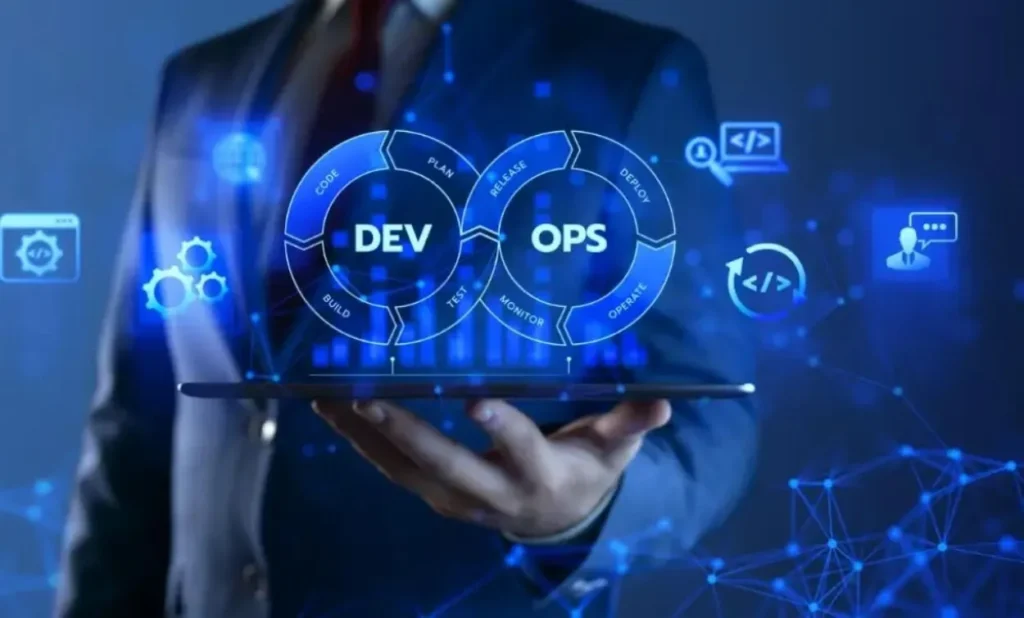
The DevOps Lifecycle begins with DevOps, a methodology for software development that accelerates the build and delivery process. The milestone became achievable when all teams in an organization worked collectively like a cricket team. The implementation of DevOps made it possible. When you introduce a unique application to the market, substantial planning is required. Likewise, the business follows the same process in the DevOps Lifecycle.
Table of Contents
1. DevOps Lifecycle: Introduction
2. DevOps Lifecycle: Systematic Explanation
3. DevOps Lifecycle: At Techpragna
4. Benefits of learning the DevOps Lifecycle at Techpragna
5. Inference
1. DevOps Lifecycle: Introduction
The term DevOps Lifecycle refers to a continuous, looping process designed to eliminate siloed steps in a traditional model. Consequently, the process has bridged the gap between software development and IT operations by integrating them in an infinite loop in vital aspects. These aspects are the infinite collaboration loop, automation, and feedback. The session explains the step-by-step lifecycle of DevOps.
2. DevOps Lifecycle: Systematic Explanation
DevOps Lifecycle features similar phases to those of software development. However, each phase has a well-defined purpose and associated activities. Below are the explanations for each step.
a. Planning
It’s a phase where the team defines the value they intend to create before writing a single line of code. Additionally, the phase involves translating business needs and prioritizing time-bound work plans and project management workflows that drive operational activities in other phases.
b. Coding
It’s the phase in which the developers convert planning and software requirements into source code. They write the code with quality assurance and future operations in mind, including setting up the components for building, testing, integrating, and deploying that follow in the pipeline.
c. Building
It’s a step in which automated compilation, validation, and packaging of deployable artifacts are performed in response to a change in the source code. It’s the DevOps tools that make changes to code via version control systems and run automated checks, producing versioned packages, such as Docker container images, that are ready for deployment or further testing.
d. Testing
The testing phase includes validation that examines the code’s behavior in production and in the real world. It also checks security and performance before reaching production.
e. Releasing
It’s a phase in which a controlled gateway is created between the build and live deployment. In this phase, code changes approved for production are made visible to the targeted users. The development teams prepare proven, tested code required for deployment and package it, thereby validating the application is production-ready. It includes coordination regarding its movement into staging and production environments.
f. Deployment
It’s a phase where the tested and packaged tools are automatically pushed to the production servers. The goal set by the teams is to deliver the application to the end-users with zero downtime. The activities performed are infrastructure provisioning, configuration management, and blue or green deployments.
g. Operations
In this phase, you will find a live application that involves day-to-day infrastructure management during execution. The operations focus on system uptime and reliability, including server patching, auto-scaling, and database management.
h. Monitoring
It’s a phase in which the teams constantly observe whether the applications are running as per the project requirements in the production environment. In case of failure, the DevOps team reworks the project to ensure the software passes the testing and monitoring phases.
3. DevOps Lifecycle at Techpragna
Techpragna offers you industry-aligned training in DevOps, as it matters most when you are working in an organization. Therefore, we focus on expertise in the DevOps Lifecycle by covering critical DevOps tools. Git, Jenkins, Docker, Kubernetes, Terraform, Ansible, Prometheus, and Grafana are popular tools with high market demand. At the same time, we give equal importance to students’ communication skills so they walk in as an employee. Hence, irrespective of your occupation or designation, our team of mentors equips you with technical expertise and hands-on experience through live projects that you can present to the interviewer, improving your chances of selection.
4. Benefits of learning the DevOps Lifecycle at Techpragna
Today, many businesses hire DevOps professionals to support the organization’s continuous growth. Consequently, they adopt CI/CD pipelines alongside cloud computing and automation, given the increasing demand for DevOps professionals. Techpragna is a recognized software training institute in Bangalore that offers training programs with a guarantee to bridge the gap between theoretical knowledge and practical implementation. Techpragna offers the following benefits:
- Out-of-the-box and industry-based curriculum.
- Live projects and hands-on-experience.
- Experienced and expert faculty.
- Live or Real-Time projects that you can showcase in an interview.
- In-depth coverage of top tools in DevOps.
4. Inference
Learning DevOps at a reputable software training institute like Techpragna equips you with practical skills, helping you get the hang of handling real-world problems. Ready for your DevOps journey?