With advances in technology, companies look for ways to eliminate repetitive tasks. Automation is widely used today. DevOps tools are widely used to enable automation. Therefore, the industry generates a demand for candidates with knowledge and experience in that field. Techpragna is the best online software training institute, where our team of expert faculty equips you to handle real-world challenges with confidence.
Table Of Contents
- Introduction: Why do DevOps tools matter?
- Top 10 DevOps Tools that Every Engineer Should Know
- Why Techpragna?
- Conclusion
Introduction: Why do the tools matter?
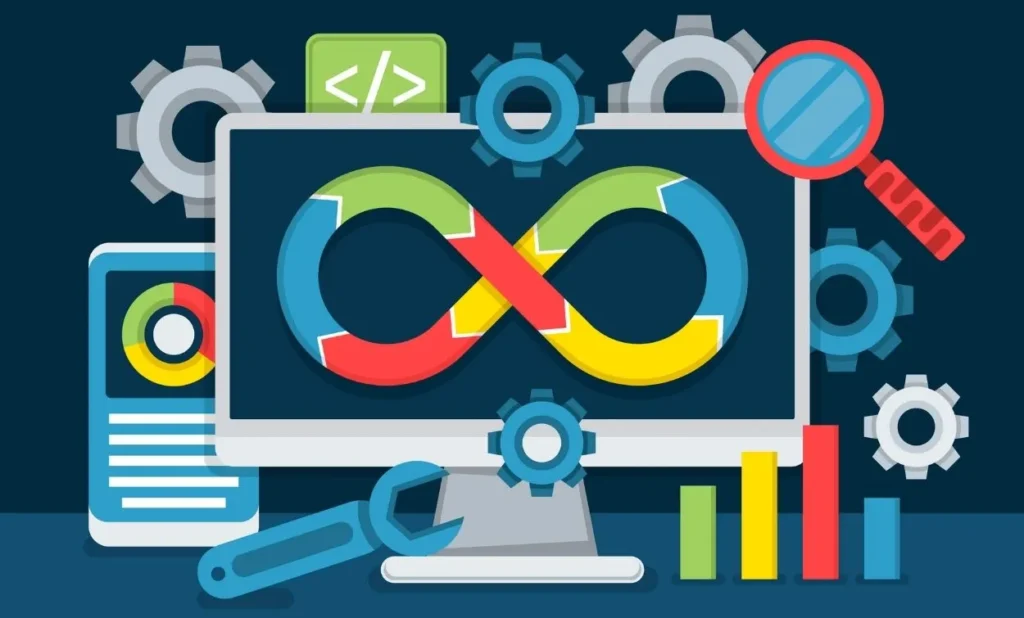
DevOps refers to a set of tools and practices that integrate development and operations to build, test, and launch software to market. Also, it’s a cultural approach that promotes automation, collaboration, and continuous upgrades. Hence, DevOps tools matter for the following reasons.
- Automates redundant tasks, resulting in speedy workflows.
- Minimization or reduction of human errors to enhance credibility in software launch.
- Monitors and detects issues in the system before the launch.
- Hassle-free and continuous delivery of applications.
Top 10 DevOps Tools that Every Engineer Should Know
Aspire your dreams as a DevOps Engineer by learning the top 10 DevOps tools in the best online software training institute for an unfair advantage. Here are the tools you need to master.
1. Docker
It’s a simplifying tool for containers, designed for smooth application deployment with uncompromised consistency.
Features
- Lightweight and portable
- Makes dependency management simple
- Predictable Deployments
2. Kubernetes
Kubernetes is called a container orchestrator for production environments because it manages clusters of containers, whereas Docker handles single containers.
Features
- Automated Operations such as application scaling, deployment, and maintenance
- Automatic replacement of failed containers.
- Contains built-in load balancing and service discovery.
3. Jenkins
Jenkins is called the automation maestro because it helps the team in automated building, testing, and deploying software efficiently.
Features
- Continuous integration and delivery automation
- Supports more than 1000 plugins
- Goes hand in hand with Git, Docker, Kubernetes, etc., when it comes to integration.
4. Git
Another name for Git is “Version Control Made Easy.” The entire software collaboration process depends on Git, which is why it’s often called the backbone of modern software development.
Features
- Tracks the required changes to be made in coding.
- Prevents discord among multiple engineers working on the same project.
- Seamless compatibility and integration with GitHub, GitLab, and BitBucket.
5. Ansible
Ansible simplifies configuration management through automated server configuration, deployment, and orchestration. Additionally, it uses YAML scripts to automate tasks for beginners.
Features
- Open-source automation platform.
- Eliminates repetitive server provisioning tasks via automation.
- Ensures consistency in an environment setup.
6. Terraform
The engineers use Terraform to define and manage multi-cloud infrastructure as code across AWS, Azure, and GCP.
Features
- Accommodates multiple cloud providers like AWS, Azure, and GCP.
- Ability to create the same infrastructure multiple times through configuration files.
- Enables users to define their infrastructure requirements using a declarative configuration.
7. Sonarqube
SonarQube is a platform used for continuous inspection and source code analysis for bugs, security vulnerabilities, and code smells.
Features
- Provides better code quality for software development
- Continuous inspection of code quality by identifying errors, bugs, issues, redundancies, and security vulnerabilities
- Supports over 30 main programming languages via plugins.
8. Prometheus
Prometheus deals with collecting and analyzing metrics from existing applications and infrastructure. Furthermore, you can get feature-rich virtual dashboards if integrated with Grafana.
Features
- Collection of time-series metrics
- Design personalized dashboards with Grafana
- Uses PromQL for performing and analyzing metrics
9. Grafana
Grafana is an open-source platform designed for displaying real-time data and monitoring. Additionally, it helps create interactive dashboards according to user requirements.
Features
- Interactive and personalized dashboards
- Supports Prometheus, Elasticsearch, and other data sources.
- Offers alerts and notifications in real time.
10. Sonatype Nexus
Sonatype Nexus is a tool that allows developers to store, manage, and distribute software components, packages, and repositories.
Features
- Suitable for managing multiple packages under a single roof. For example: Maven, npm, PyPi, etc.
- Easy integration with automated DevOps tools such as Jenkins for hassle-free storage, promotion, and deployment.
- Provides clustered deployments and high-traffic test servers to maximize uptime and scale according to company requirements.
- Converts raw system logs, metrics, and security data into structured data.
- Designed for generating customized reports and dashboards.
- Supports centralized logging and integration with DevOps tools.
Why Techpragna?
Techpragna is recognized as the best online software training institute and offers the following advantages.
- In-depth coverage of top DevOps Tools.
- Live online and offline sessions with 1:1 interaction.
- Valuable knowledge and hands-on-experience through live projects.
- Guaranteed placement on successful completion of the course.
- Wide range of career opportunities in India and abroad.
Conclusion
Regardless of whether you are a beginner or looking to switch careers to DevOps, it would be beneficial to join the best online software training institute that cares about your career needs. Ready for the DevOps journey? Reach us at Techpragna today!