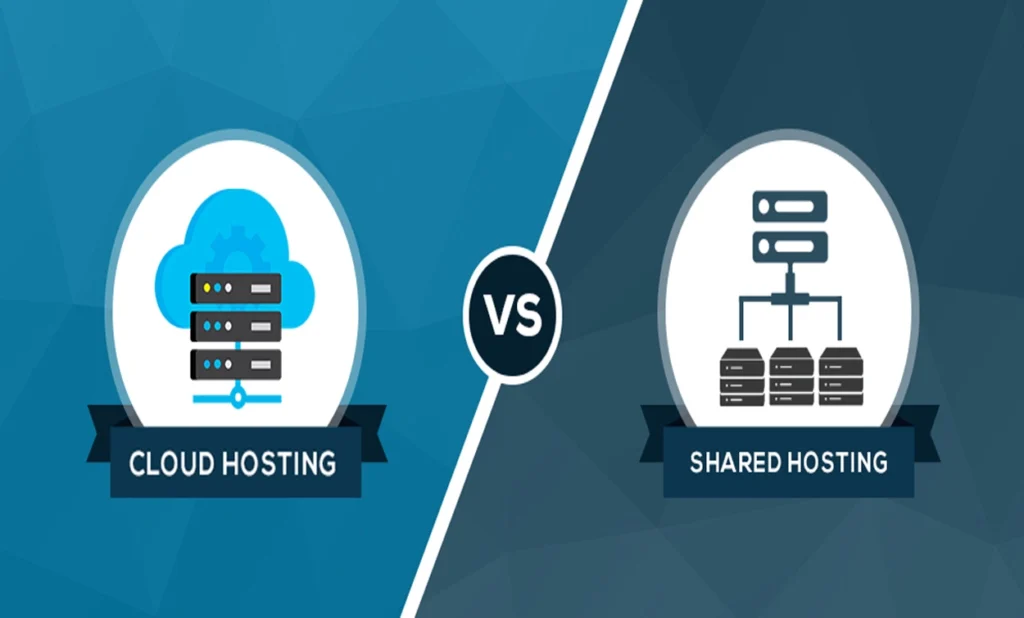
Selecting the appropriate hosting service is necessary to ensure that a website performs optimally, safely, and has the ability to scale. Among the many services available are web hosting and cloud hosting. While both allow websites to be accessible through the Internet, they differ in many ways.
This blog discusses web hosting versus cloud hosting and the differences between them, along with the benefits of google cloud computing and cloud services for businesses.
Table of Contents
- What Is Web Hosting?
- What Is Cloud Hosting?
- Web Hosting vs. Cloud Hosting: Key Differences
- Benefits of Cloud Hosting
- Which Hosting Solution Should You Choose?
1. What Is Web Hosting?
Web hosting refers to the process of storing website data in a server and making them available on the Internet. Types of conventional web hosting services include shared web hosting, virtual private server web hosting, and dedicated web hosting.
Shared hosting is relatively inexpensive and is appropriate for small websites, blogs, and startups. The performance of the websites may be affected because the resources of the server are being shared among several users.
2. What Is Cloud Hosting?
In cloud hosting, multiple virtual servers form a network to host various websites and applications. This technology does not make use of one physical server for performing various operations.
The google cloud computing technology enables the organization to utilize scalable infrastructure, computing resources, storage, and network. This technology helps the organization in handling varying workloads.
Cloud hosting proves beneficial for the e-commerce website and growing business applications.
3. Web Hosting vs. Cloud Hosting: Key Differences
Feature | Web Hosting | Cloud Hosting |
Infrastructure | Often relies on a single server | Uses interconnected cloud resources |
Scalability | May require plan upgrades | Resources can scale more flexibly |
Performance | Depends on server capacity | Resources can adapt to workload demands |
Reliability | Depends on the hosting setup | Can offer redundancy across resources |
Cost | Often predictable and affordable | May use usage-based pricing |
Best for | Small websites and blogs | Growing websites and demanding applications |
4. Benefits of Cloud Hosting
Cloud hosting has numerous benefits such as flexibility in terms of scalability, improved resource utilization, and availability of cutting-edge technology. Cloud hosting enables companies to scale up their computational capacity based on changes in traffic instead of deploying more hardware.
The cloud solutions currently available today may also include such features as database management, security, analytics, backup, and monitoring capabilities which will aid in IT management and application development.
.
5. Which Hosting Solution Should You Choose?
Web hosting serves well for individual blogs, small business websites and sites with predictable traffic.
Cloud Hosting will be a better option for business with need for scalability and infrastructure needs. You should consider several factors including budget, skills and expected traffic before you select web hosting services.
Conclusion
The primary distinction between web hosting and cloud hosting lies in how resources are delivered and controlled. Web hosting ensures ease and cost-effectiveness, whereas cloud hosting ensures flexibility and scalability. By analyzing the requirements of your website and the best cloud services, you will be able to choose a hosting service.