
Cybersecurity course
Aspire for excellence in cyber defense skills via a project-based cybersecurity course.
- Gain cybersecurity acumen with real-world projects.
- Master essential tools – Kali Linux, Wireshark, Python, Firewall Configuration, SIEM Tools, & Networking
- Choose convenient timings for attending online or offline classes.
- Gain a thorough understanding of ethical hacking, penetration testing, network security, and detecting potential threats.

World-Class Instructors

1:1 with Industry Mentors

55% Avg. Salary Hike

Interview Preparation
World-Class Instructors
1:1 with Industry Mentors
55% Avg. Salary Hike
Interview Preparation
About the Cybersecurity Training Program!
Turn your passion for cybersecurity certification into reality at Techpragna. Our course equips you with advanced skills and techniques for protecting confidential and sensitive data, detecting vulnerabilities, and mitigating them, whether you’re in business or working as an employee in an organization.
Cyber Security Training Program – Salient Features
Give the required kickstart to your career at Techpragna’s cybersecurity training course featuring:
- Mastery and expertise with essential cybersecurity tools – Kali Linux, Wireshark, Burp Suite, Metasploit, and Splunk.
- Global certification that increases your chances of getting hired in top companies in the world of cyber and cloud security.
- Higher engagement with the help of expert-led offline, online, and interactive classes.
- Scope to showcase your cybersecurity skills with impressive and real-world projects on GitHub and LinkedIn.
- Gain expertise in AI-driven threat detection tools and ethical hacking for automated and enhanced cybersecurity strategies.
- Gain hands-on experience via project-based learning.
Request more information
What You’ll Learn
Accelerate your career in cyber security with our Cyber Security Training at TechPragna in Bangalore. This comprehensive course equips you with the skills and techniques to protect digital assets, identify vulnerabilities, and mitigate cyber threats—perfect for both beginners and working professionals.
Cyber Security Training – Key Features
- Master Essential Tools: Kali Linux, Wireshark, Python, Metasploit, Burp Suite, and SIEM tools
- Learn Core Concepts: Ethical hacking, penetration testing, network security, and threat detection
- Hands-On Projects: Work on real-world cyber security scenarios and practical simulations
- Live Interactive Sessions: Attend online and offline sessions led by top industry professionals
- Career Advancement Support: Receive guaranteed placement assistance with interview preparation
- Beginner-Friendly Approach: Suitable for freshers, IT professionals, and career switchers
Request more information
Cybersecurity Curriculum
Introduction to Cybersecurity
- What is Cybersecurity? Importance & Scope
- Cybersecurity Domains & Career Paths
- Types of Cyber Threats and Attacks
- Security Principles: CIA Triad (Confidentiality, Integrity, Availability)
- Overview of Security Compliance & Standards (ISO, NIST, GDPR)
- Understanding Black Hat, White Hat, Grey Hat Roles
- Mini Task: Research Top 5 Cyber Attacks in History
Networking Fundamentals for Cybersecurity
- OSI & TCP /IP Models Explained
- IP Addressing, Subnetting, and DNS
- Ports, Protocols (TCP, UDP, HTTP, HTTPS, FTP)
- Firewalls and NAT Basics
- Packet Flow and Network Layers in Security
- Wireshark Basics for Packet Analysis
- Hands On: Capture and Analyze Network Packets
Linux & Windows Essentials
- Linux CLI Basics and File Permissions
- User & Group Management
- Log Analysis & Syslog Management
- Windows Architecture & Registry Basics
- PowerShell for Security Tasks
- Task Scheduler and Event Viewer
- Practical: Hardening Linux and Windows Systems
Cyber Threats and Attack Vectors
- Malware Types: Virus, Worms, Trojans, Ransomware
- Phishing, Spear Phishing, and Social Engineering
- Denial of Service (DoS) and DDoS Attacks
- Man in the Middle (MITM) and ARP Spoofing
- Zero Day Vulnerabilities and Exploits
- Brute Force and Dictionary Attacks
- Case Study: Real World Attack Analysis
Vulnerability Assessment
- What is Vulnerability Assessment?
- Vulnerability Types and Categories
- Automated Scanning Tools: Nessus, OpenVAS
- Manual Testing Techniques
- Vulnerability Databases (CVE, NVD, Exploit DB)
- Generating & Interpreting Scan Reports
- Task: Scan a System and Report Weaknesses
Penetration Testing (Ethical Hacking)
- Phases of Penetration Testing
- Footprinting and Reconnaissance
- Scanning and Enumeration Techniques
- Gaining Access – Exploitation Tools
(Metasploit) - Maintaining Access and Covering Tracks
- PenTest Report Writing
- Project: Simulate a Controlled Penetration
Test
Web Application Security
- U nderstanding Web Architecture
- Common Attacks: XSS, SQL Injection, CSRF
- Input Validation & Output Encoding
- Security Headers and HTTPS Implementation
- OWASP Top 10 Vulnerabilities Deep Dive
- Tools: Burp Suite, OWASP ZAP
- Mini Project: Vulnerability Testing on DVWA
Cryptography Essentials
- asics of Encryption and Decryption
- Symmetric vs Asymmetric Encryption (AES, RSA)
- Hashing Algorithms (SHA, MD5)
- Digital Signatures and Certificates
- Public Key Infrastructure (PKI)
Security Operations & Monitoring (SOC)
- Introduction to S OC and Its Role
- SIEM Tools: Splunk, ELK Stack
- Log Monitoring and Alerting
- Incident Detection and Triage
- Threat Intelligence Integration
- Use Case Creation and Analysis
- Lab: Analyze Logs and Generate Alerts
Firewalls, IDS & IPS
- What is a Fire wall? Types and Rules
- Network Based vs Host Based Firewalls
- Intrusion Detection Systems (IDS)
- Intrusion Prevention Systems (IPS)
- Snort & Suricata for Threat Detection
- Configuring iptables and Windows Defender
- Practical: Simulate an IDS Setup and Trigger Alerts
Cloud Security Fundamentals
- Cloud Models: IaaS, PaaS, Saa S
- Securing AWS/GCP/Azure Environments
- Cloud IAM Policies and Role Managemen t
- Shared Responsibility Model in Cloud
- Cloud Logging & Monitoring Tools (AWS CloudTrail, Azure Monitor)
- Encrypting Data at Rest and in Transit
- Project: Secure an S3 Bucket and Audit Logs
Mobile & IoT Security
- Mobile Device Security Concepts
- Common Vulnerabilities in Android & iOS Apps
- Mobile Device Management (MDM)
- IoT Security Challenges and Risks
- OWASP Mobile Top 10
- Pen Testing Mobile Apps with MobSF
- Lab: Analyze a Vulnerable Mobile App
Digital Forensics & Incident Response
- What is Incident Response ? Stages & Lifecycle
- Digital Forensics Basics and Chain of Custody
- Disk Imaging and Data Recovery
- Memory & Network Forensics
- Tools: Autopsy, FTK Imager, Volatility
- Writing Forensic Reports
- Practical: Investigate a Simulated Breach
Security Compliance & Risk Management
- Risk Assessment & Mitigation Techniques
- Security Frameworks: NIST, ISO 27001, SOC 2
- GDPR, HIPAA, and Other Legal Regulations
- Creating and Enforcing Security Policies
- Data Classification and Access Control
- Business Continuity and Disaster Recovery
- Task: Draft a Risk Management Plan
Cybersecurity Projects
- PenTest a Simulated Company Network (TryHackMe/HackTheBox)
- Secure a Web Application and Harden Servers
- Conduct a Full Incident Response Drill
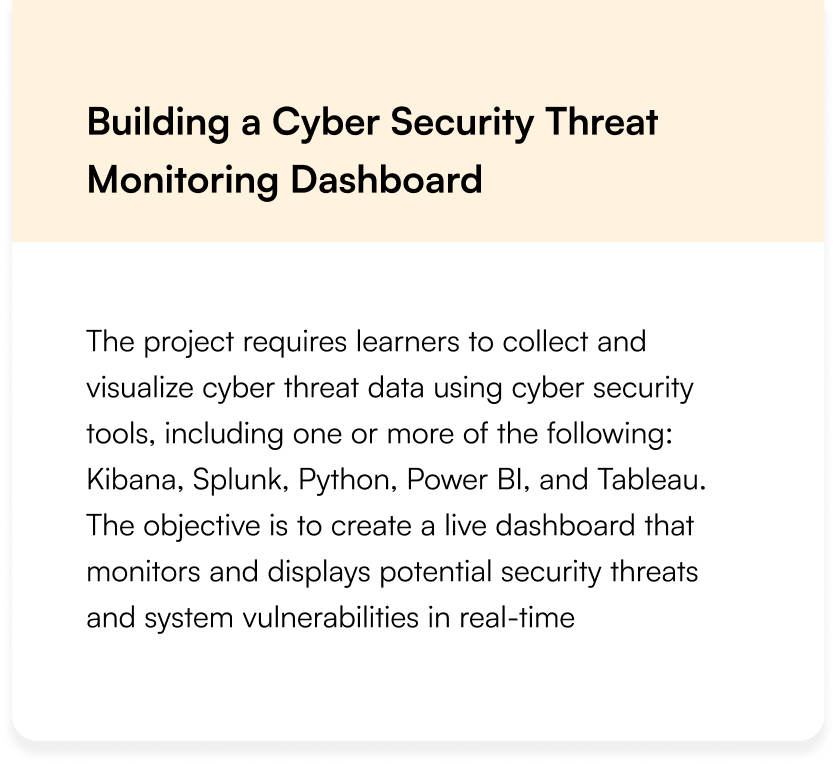
- Build a Security Monitoring Dashboard (SIEM)
- Simulate Social Engineering Attack & Report
- Cryptographic Messaging System using Python
- Document and Present Project Portfolio
Career Support & Certification Prep
- Resume Writing and LinkedIn Optimization for Cyber Roles
- Mock Interviews with Expert Feedback
- Certification Guidance: CEH, CompTIA Security+, CISSP, OSCP
- Job Boards, Internships, and Referral Opportunities
Master In-Demand Skills with Practical, Industry-Based Learning
Roles that cybersecurity plays in an organization
Our Cybersecurity training programs offer a clear career path for the following positions.
Security Analyst
A security analyst’s role in an organization is to monitor systems and networks for security breaches and investigate incidents to produce a report that enables the company to take immediate action
Security Engineer
On the other hand, a security engineer designs the strategy and implements the practical measures necessary to maintain security. They use advanced tools to encrypt data, safeguarding networks and workflow systems.
SOC Analyst
Detects, analyzes, and responds to cyberattacks in real time using SIEM tools.
Penetration Tester (Ethical Hacker)
Identifies overall vulnerabilities and fixes them before malicious hackers can invade sensitive information.
Incident Response Specialist
Provides valuable advice on risk management and trending security technologies to enhance the organization’s cyber defense. Also sets up a backup plan to restore critical files.
Security Architect
A security architect’s role is to develop and enforce security strategies and frameworks aligned with the organization’s business goals, ensuring uncompromising compliance.
Skills Covered in Cybersecurity
Social Engineering
Security Automation
Security Compliance
Malware Analysis
Cyber Forensics
IoT Security
Secure Coding
Business Intelligence
Cloud Security
SIEM Tools
Cyber Security Tools Covered

Security Analyst
Monitors and analyzes security incidents to detect threats and protect organizational assets through alerts, reports, and response actions.
Security Engineer
Designs, implements, and maintains security infrastructure like firewalls, intrusion detection systems, and encryption to safeguard networks and systems
Ethical Hacker / Penetration Tester
Simulates cyber-attacks by identifying vulnerabilities and weaknesses in systems to help organizations strengthen their defenses
Incident Response Specialist
Leads investigations into security breaches, contains threats, and develops recovery plans to minimize damage and restore normal operations
Security Architect
Develops and enforces comprehensive security strategies and frameworks aligned with organizational goals and compliance requirements
Cyber Security Consultant
Advises businesses on best practices, risk management, and the latest security technologies to improve overall cyber defense posture
Skills Covered
Threat Analysis
Vulnerability Assessment
Network Security
Ethical Hacking
Incident Response
Security Auditing
Cryptography
SIEM Tools
Cloud Security
Business Intelligence
Cyber Security Tools Covered

Career Enhancement Services


100% support for job placement.

1:1 Career Mentorship

Career Guidance Best-Suited to Your Needs

Career Sessions according to industry standards

Valuable tips to crack the interview

Optimization of Resume and LinkedIn profile
Career Services
Placement Assistance
Personalized Guidance
Mock Interview Preparation
One-on-One Mentoring session
Career Oriented Seesions
Resume & LinkedIn Profile Building
How our program works
Enhance Your Skills to Transform Your Career Path
- Gain official proof of your expertise from a trusted institution, increasing your value in the eyes of employers and clients.
- Stand out in competitive job markets and unlock better job roles, promotions, or freelance opportunities.
- Certifications ensure your skills are aligned with current industry standards, making you job-ready from day one.
- Completing a certified course strengthens your belief in your capabilities and readiness to tackle real-world challenges.
- Join a professional community, gain access to hiring managers, and receive support from placement partners and mentors.
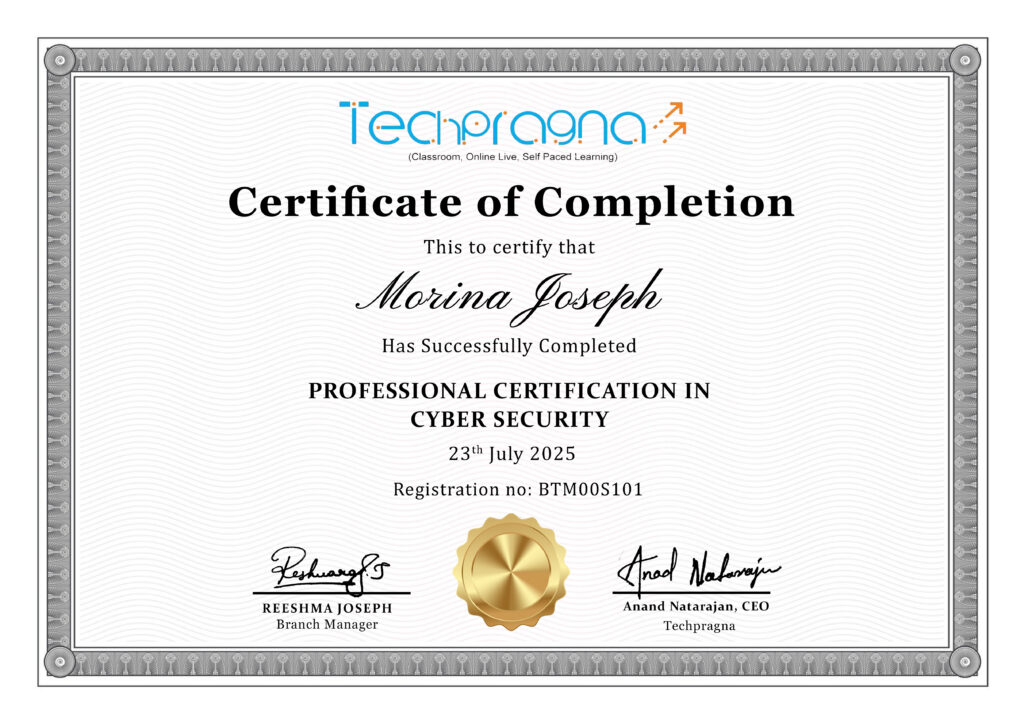
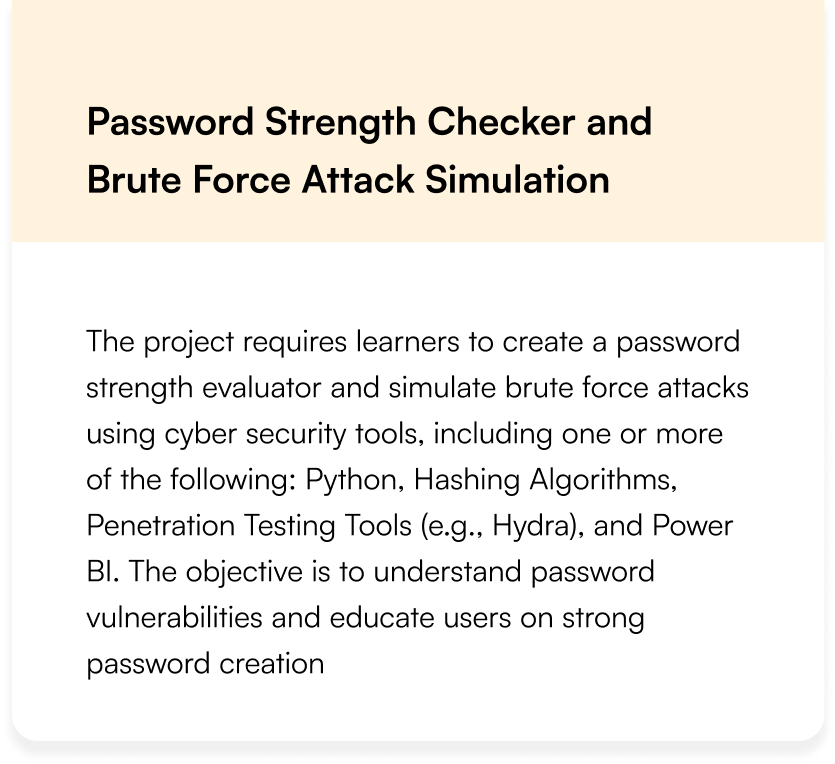
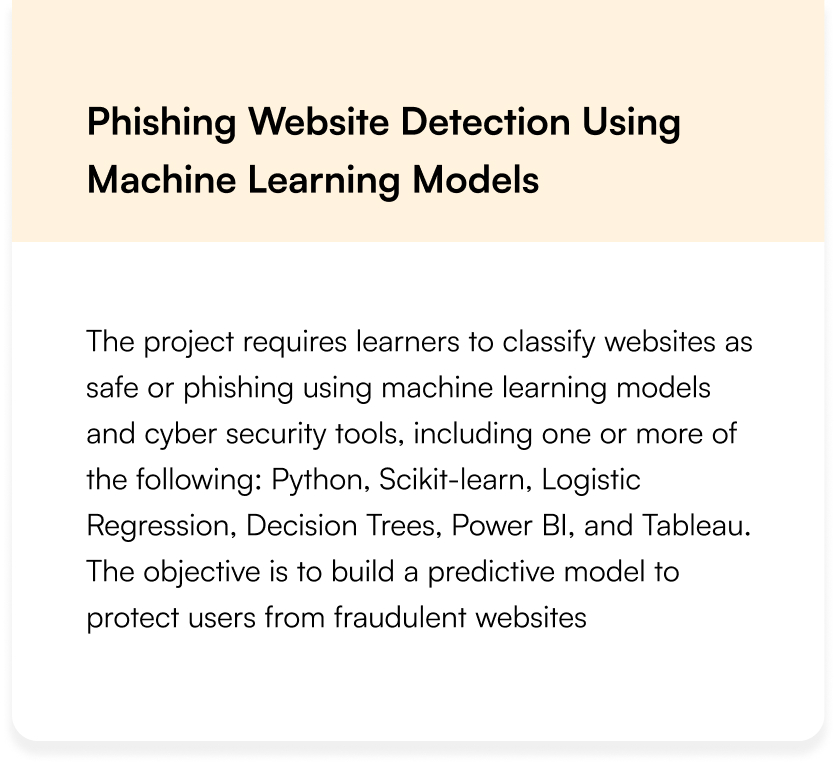
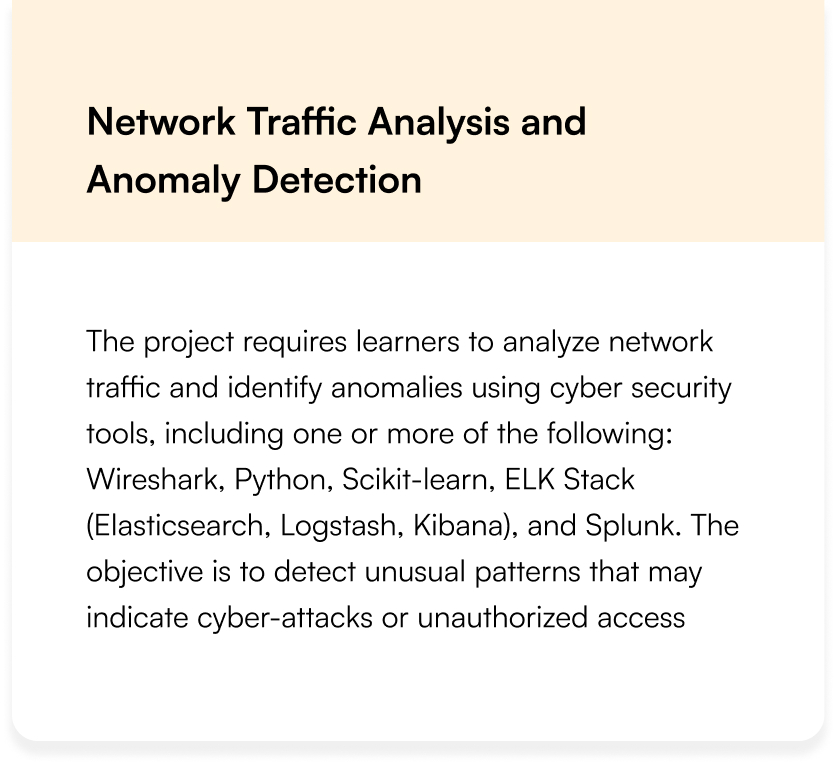
Cyber Security Projects Covered
Land Your Dream Job Our Alumni
Cyber Security Training FAQs
Can I learn cybersecurity without a technical background?
Answer:
Yes! Many courses cater to beginners, but you’ll need to learn:
Basic networking
Operating systems
Scripting (Python/PowerShell).
Start with foundational courses like Google’s Cybersecurity Certificate or CompTIA Security+.
What tools will I learn in cybersecurity training?
Answer:
You’ll work with tools like:
Nmap (network scanning)
Wireshark (packet analysis)
Metasploit (penetration testing)
Splunk (SIEM)
Burp Suite (web app security).
Is cybersecurity training enough to get a job?
Answer:
Training + certifications + hands-on experience (labs, CTFs, internships) are key. Employers value:
Certifications (e.g., Security+, CEH, CISSP)
Practical skills (e.g., Hack The Box, TryHackMe)
Soft skills (problem-solving, communication)
What’s the difference between ethical hacking and cybersecurity?
Answer:
Cybersecurity: Broad field (defense, risk management, compliance).
Ethical Hacking: Subset focused on offensive security (penetration testing, vulnerability assessments).
Training in both is valuable for roles like Penetration Tester or SOC Analyst.
What’s the best way to practice cybersecurity skills?
Answer:
Hands-on labs: Platforms like TryHackMe, Hack The Box, and CyberSecLabs offer real-world scenarios.
Capture the Flag (CTF) competitions: Develop problem-solving skills (e.g., OverTheWire, picoCTF).
Homelabs: Set up a virtual lab with VirtualBox/Kali Linux to test attacks/defenses.
Is this course available online or offline?
Tech Pragna are offered in both online and offline
What’s the difference between SOC Analyst and Penetration Tester roles?
Answer:
SOC Analyst:
Monitors networks for threats.
Uses SIEM tools (Splunk, Sentinel).
Entry-level friendly.
Penetration Tester:
Proactively hacks systems to find flaws.
Uses Kali Linux, Metasploit.
Requires certifications like OSCP or CEH
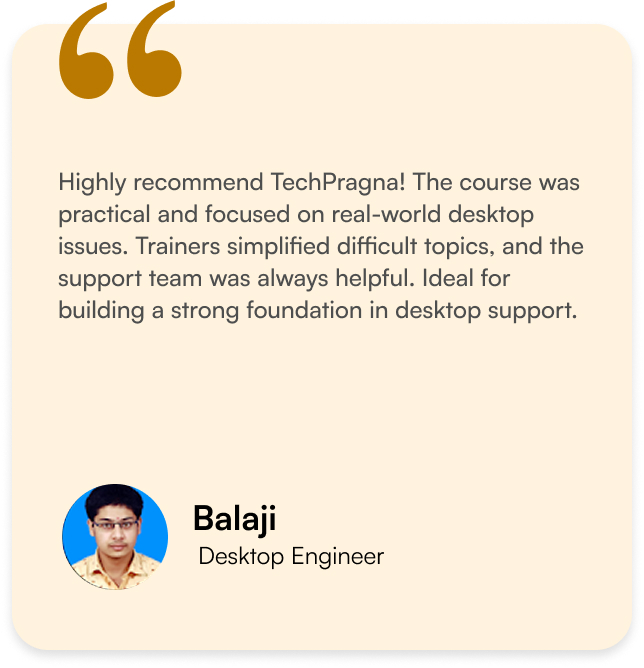
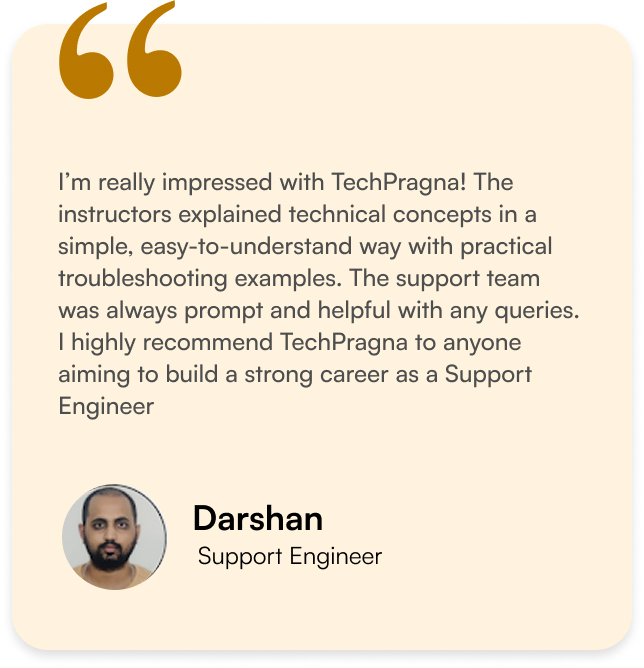
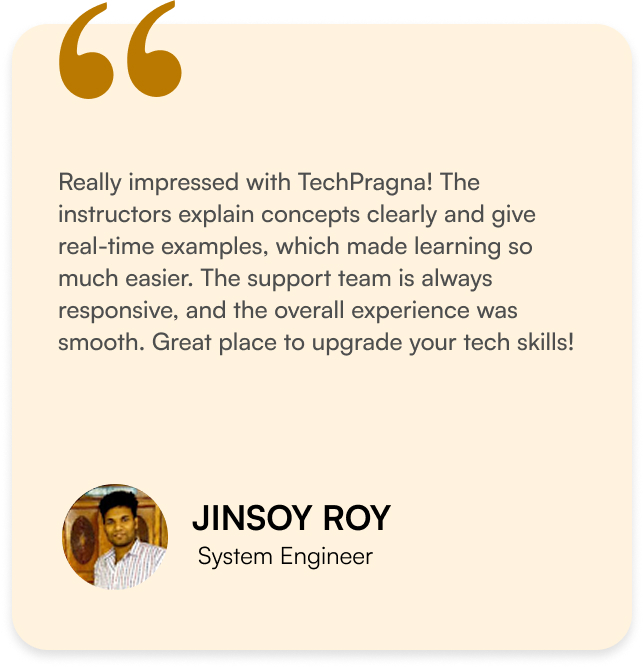
What Our Learners Have To Say

Explore the Latest Trending Courses

Software Testing
- Online/Offline
- 6 Months
- Professional Level Certification
- Projects and Case Study

Data Science
- Online/Offline
- 6 Months
- Professional Level Certification
- Projects and Case Study

Network Engineering
- Online/Offline
- 6 Months
- Professional Level Certification
- Projects and Case Study

Cloud Computing
- Online/Offline
- 6 Months
- Professional Level Certification
- Projects and Case Study
Software Testing
- Online/Offline
- 6 Months
- Professional Level Certification
- Projects and Case Study

Data Science
- Online/Offline
- 6 Months
- Professional Level Certification
- Projects and Case Study

Network Engineering
- Online/Offline
- 6 Months
- Professional Level Certification
- Projects and Case Study
Cloud Computing
- Online/Offline
- 6 Months
- Professional Level Certification
- Projects and Case Study